AgentReady
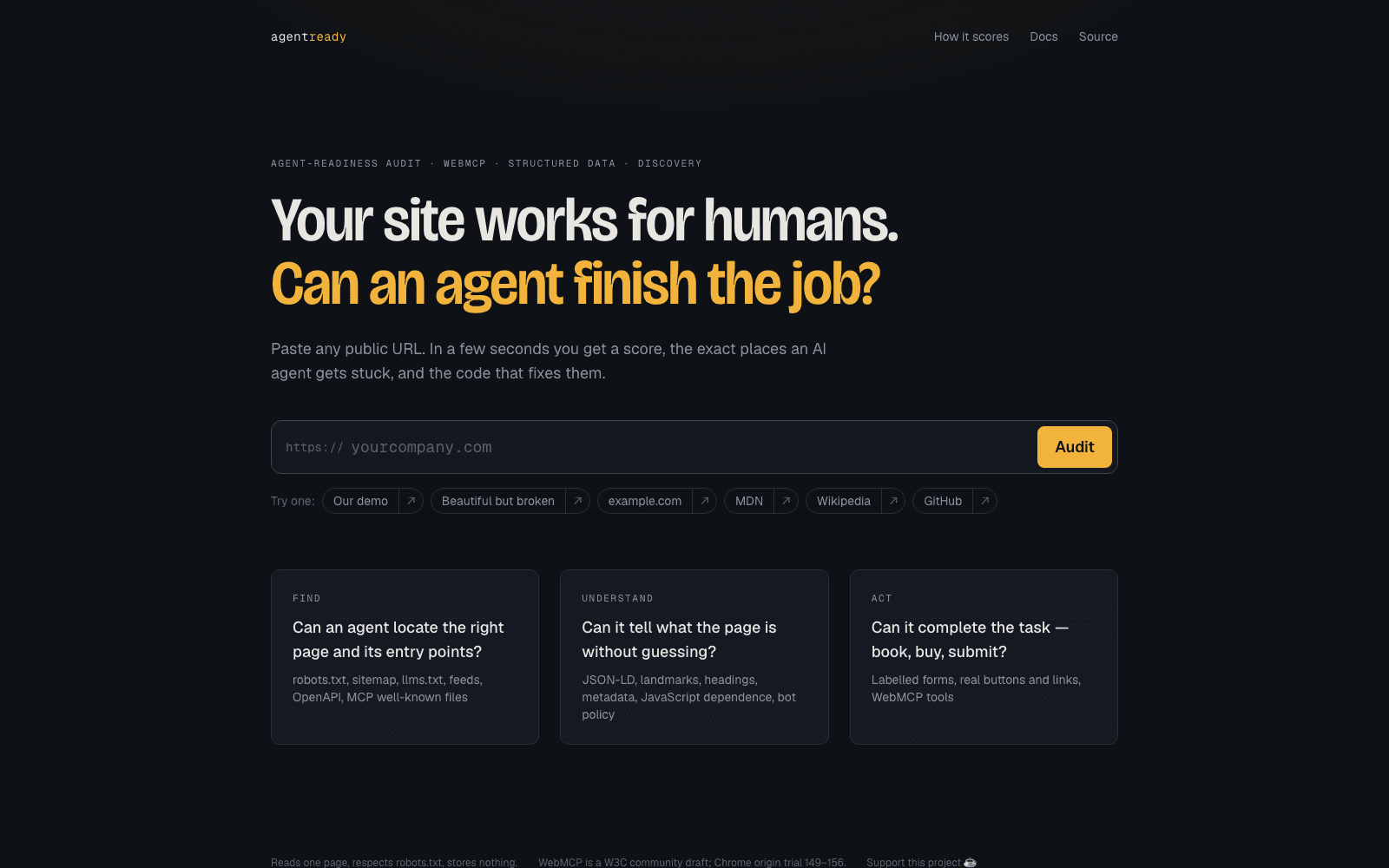
Agent-readiness audit
Your site works for humans. Can an agent finish the job?
Paste any public URL and get an agent-readiness report: a 0–100 score, the exact places an AI agent gets stuck, and copy-paste fixes, including WebMCP tool stubs.
Where agents get stuck
Each report follows an agent through three stages, and shows the code that fixes each gap.
Can an agent locate the right page and its entry points?
robots.txt, sitemap, llms.txt, feeds, OpenAPI, MCP well-known files
Can it tell what the page is without guessing?
JSON-LD, landmarks, headings, metadata, JavaScript dependence, bot policy
Can it complete the task: book, buy, submit?
Labelled forms, real buttons and links, WebMCP tools
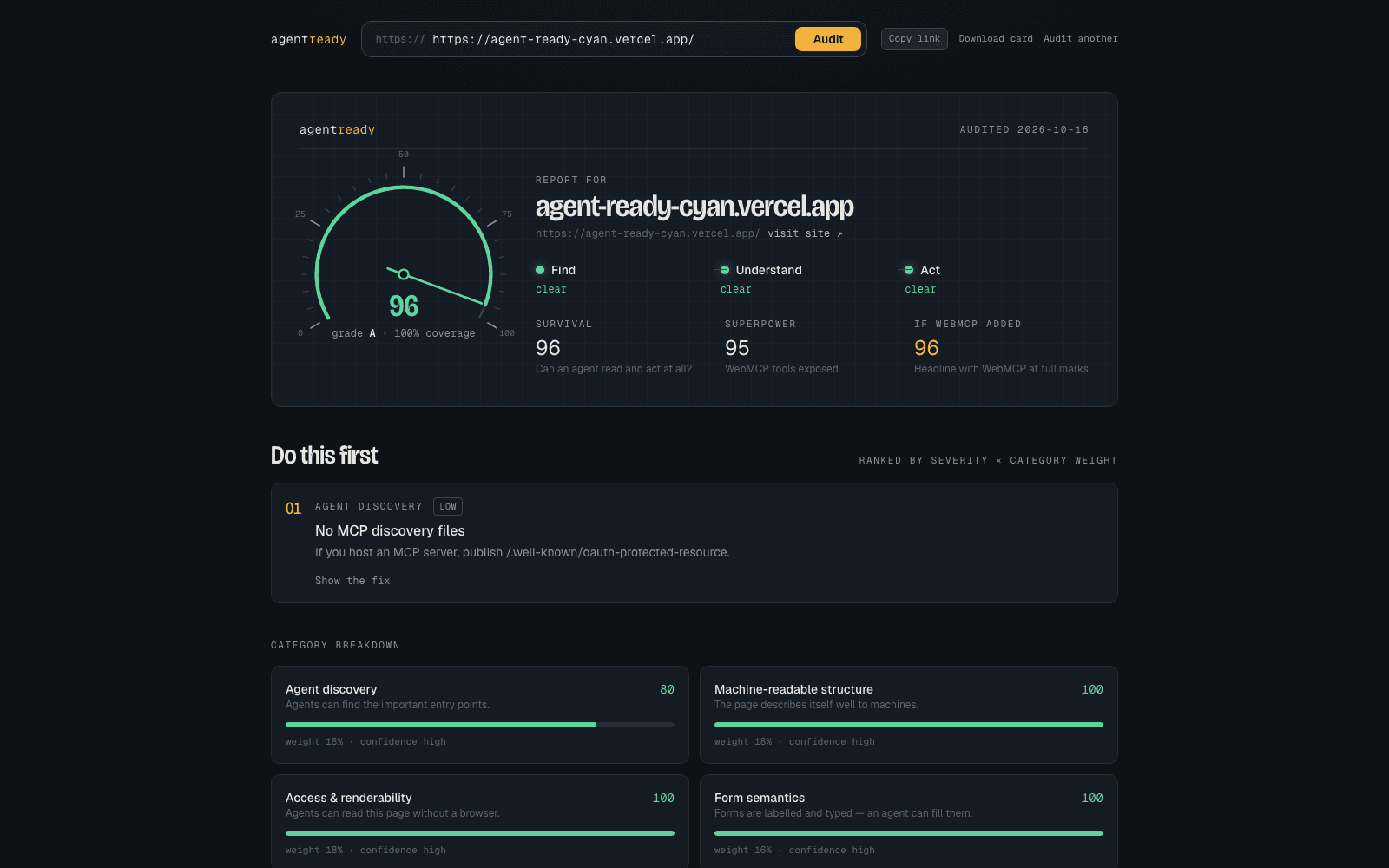
What you get
Six weighted checks
Agent discovery, machine-readable structure, access and renderability, form semantics, actionability, and WebMCP capability. The weights and methodology are published in the docs.
WebMCP stub generator
Every audited page gets a paste-ready tool built from its own first form: declarative toolname attributes plus registerTool code with a correct JSON schema.
A WebMCP app itself
In a WebMCP-capable browser, the AgentReady home page exposes an audit_site tool that an agent can call directly.
Honest scoring
Evidence it can't observe never counts against a site. Coverage and confidence are always shown, and a blocked fetch gets no score rather than a made-up grade.
Shareable reports
Every report has its own link to copy, and a share card you can download for a post or a slide.
Works without JavaScript
Reports are fully server-rendered, and there's a JSON API with an OpenAPI description for programmatic audits.
Light-touch by design
An audit is one server-side fetch of the page, plus a handful of small same-origin requests for files like robots.txt, sitemap.xml, llms.txt and /.well-known/. It respects robots.txt. There's no database and no headless browser, and nothing is stored.
Free and open source under the MIT licence. Source on GitHub. Built by a human-directed team of AI agents, with adversarial cross-review on every merge.